Denwadaiko Insights
-
The Value of Choosing the Right Platform for Long-Term Growth
Why Platform Choice Matters Success in any competitive market often depends on the quality of the platform you choose. Whether the goal is business expansion, investing, or managing digital assets, the right platform can improve efficiency, reduce unnecessary costs, and provide better long-term opportunities. Many people focus only on short-term promotions or surface-level features. However,…
-
The Role of Focus in Reducing Work-Related Stress
Why Distraction Increases StressIn modern work environments, distractions are everywhere. Constant notifications, multitasking, and shifting priorities make it difficult to stay focused on a single task. As a result, work often feels fragmented and overwhelming.When attention is divided, tasks take longer to complete. This creates a backlog of unfinished work, which naturally increases stress. Over…
-
Why Simple Work Systems Outperform Complex Setups
The Problem with Overcomplicated Systems In today’s fast-paced work environment, many individuals and organizations are constantly searching for better systems to improve productivity. Ironically, the more complex these systems become, the harder they are to maintain. Simple work systems often outperform complex setups because they reduce friction. When a system is easy to understand and…
What Kind of Environment Are You Working In?
In recent years, many companies have adopted open office layouts to encourage smoother communication and reduce rigid hierarchies. By removing partitions, these spaces aim to create a more connected and collaborative work environment.
Open offices are closely linked to the rise of “co-working,” a modern approach that emphasizes shared space, openness, and collaboration. Together, they represent an evolving model of how people work today.
Co-working and Shared Space
Co-working refers to a style of work in which individuals from different backgrounds share the same physical space while focusing on their own projects. The core idea is simple: bring people together, encourage the exchange of ideas, and create opportunities for synergy.
As flexible work systems and remote collaboration tools continue to expand, co-working has become a practical model built on five core principles: community, openness, collaboration, sustainability, and accessibility.
The movement gained early momentum when freelancers in cities like New York began sharing their apartments as informal workspaces. Even while working independently, participants benefited from shared knowledge, networking, and a sense of professional community.
Open Offices and a New Work Culture
Open office layouts are often seen as a natural extension of co-working principles. By reducing physical barriers, they encourage spontaneous communication and teamwork.
While not without challenges, open environments have reshaped how organizations think about space, hierarchy, and collaboration. In many industries, they symbolize a shift toward flexibility and collective growth.the development of a new workplace culture.
”
Open Offices and Workplace Efficiency
One of the clearest examples of co-working principles in action is the open office layout, where physical partitions are minimized or removed altogether.
Without barriers between desks, employees interact more frequently and can collaborate more naturally. The increased visibility and accessibility often encourage spontaneous discussions, faster decision-making, and smoother communication across teams.
Open offices can also reduce hierarchical distance. When employees and managers share the same space, it becomes easier to exchange ideas and foster a culture of openness.
Beyond communication, flexibility is another advantage. Open layouts are easier to reconfigure as teams grow or projects change. From a cost perspective, organizations may also reduce overall space usage—sometimes by 10 to 40 percent compared to traditional partitioned offices—resulting in measurable operational savings.
”
As organizations increasingly recognize the space efficiency of open offices, similar concepts have evolved into dedicated co-working spaces within the broader “shared economy.”
In these environments, professionals from different industries gather under one roof to work independently while sharing ideas and resources. Co-working spaces are designed to encourage collaboration across diverse fields, from technology and business to art and creative industries.
Creative hubs and community-driven workspaces have demonstrated how shared environments can support artists, entrepreneurs, and independent creators by providing both structure and flexibility.
By combining efficiency with collaboration, co-working spaces represent a practical extension of the open office philosophy.
”
The Challenges of Open Offices
While open offices promote collaboration and flexibility, they also come with notable drawbacks.
One of the primary concerns is privacy. Partitions may create physical barriers, but they also provide a sense of personal space. In open environments, employees can feel constantly visible—whether others can see their screens, observe their work habits, or overhear phone conversations. Over time, this lack of privacy may increase stress and reduce comfort.
Health considerations are another concern. Without physical dividers, germs from coughing or sneezing may spread more easily, particularly in densely populated spaces. In addition, inadequate ventilation in large shared areas can contribute to headaches, fatigue, and general discomfort.
For these reasons, organizations must carefully balance openness with practical considerations such as privacy, air quality, and employee well-being.
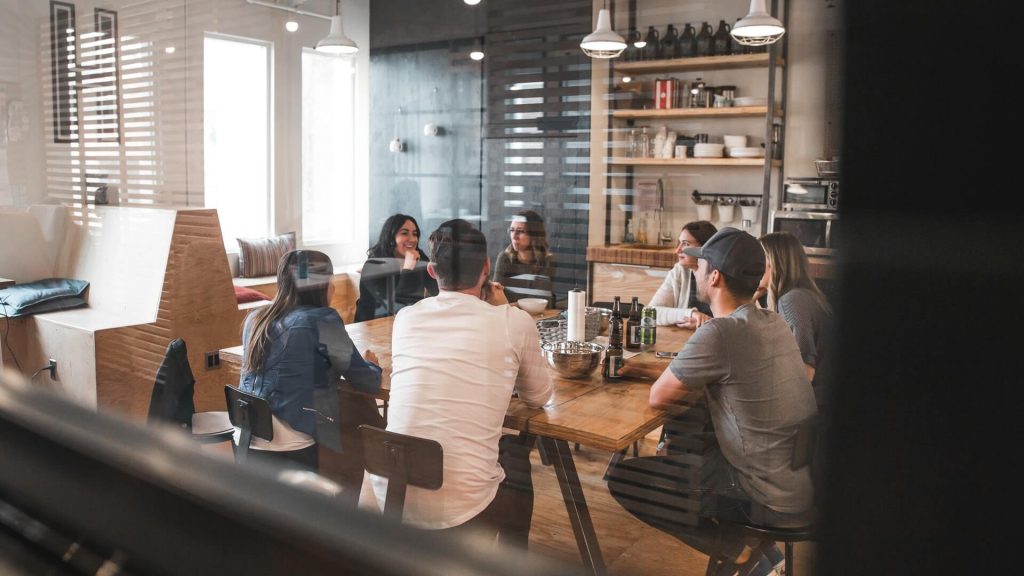
We’ve explored both the advantages and the challenges of open offices and co-working environments.
There is no single “perfect” solution. Collaboration, communication, efficiency, and employee well-being are all essential elements of a productive workplace. At the same time, cost efficiency remains an important factor. Open office layouts can reduce space usage by 10 to 40 percent compared to traditional partitioned offices, offering measurable operational benefits.
Ultimately, the ideal work environment depends on balance. Organizations should evaluate their culture, team dynamics, and long-term goals to design spaces that maximize strengths while addressing potential limitations.
In a rapidly evolving business landscape, productivity is influenced not only by physical space but also by strategic systems and financial infrastructure. Resources such as cryptofortrader.com provide insight into modern exchange structures and digital market operations for businesses operating globally.